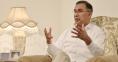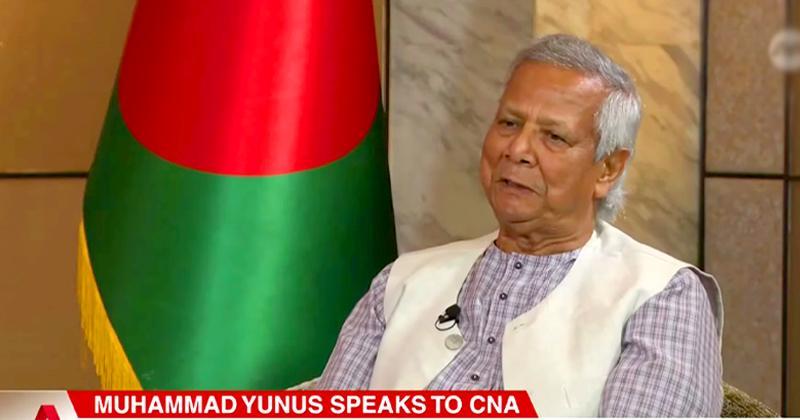
Chief Adviser Prof Mohammad Yunus stressed the need for carrying out necessary reforms and trials before upcoming national election, saying that without them, people's hopes of preventing the return of fascism would remain unmet.
In an interview with Singapore-based news outlet Channel NewsAsia, he said his government's commitment to the people after the uprising was to carry out three basic tasks: reforms, trials of the crimes committed by the ousted regime and holding a free and fair election.
Asked what his priority was -- elections first or reforms first -- he said that holding elections without reforms would change nothing.
"Imagine holding an election without carrying out the two other things. Then you would go back to the same old problems," said Yunus.
However, the chief adviser vowed to restore democracy and deliver a credible election.
"There's no point in having elections if it's not legitimate. My job is to make sure that an acceptable, clean, enjoyable election takes place," he told CNA on Wednesday.
"We are coming close to achieving the goals that we have set for ourselves. There were lots of things to be reformed because the political system that we had was rigged, misused and abused."
On August 5 last year, an uprising ended Shekh Hasina's 15-year rule. She fled to neighbouring India following her ouster and has been put on trial in absentia.
Ties between India and Bangladesh have been strained since, as Bangladesh seeks her return. India has not responded to the extradition requests.
Dhaka also urged New Delhi to stop Hasina from making "false and fabricated" statements after she urged supporters online to resist the interim government.
Referring to Indian Prime Minister Narendra Modi, Yunus said, "He explained that India could not control social media.
"We are not going to kind of get into a battle trying to get Hasina out of India. We said, 'You can keep her. Our trial will go on'.
"But in the meantime, she should not be given any chance to destabilise Bangladesh. She still has many followers within Bangladesh -- they will follow the same thing that they did before to destabilise the whole country."
The Nobel peace laureate, who was thrust into the role following the revolution, said he was unwilling to take on the responsibility at first as de facto prime minister.
"[The student leaders] pleaded with me that so much blood has been shed … That kind of hit me in a way … After (they) made so many sacrifices, I should do something on my own too. So, I accepted the job," he said.
The 85-year-old said he does not plan to stay on in government after the elections.
Amid his decision to step back from politics, Yunus said he hopes his leadership leaves a lasting legacy.
"I would hope that from now on, Bangladesh will be on the right track, it will not be derailed again," he said.
Yunus spoke to CNA in Kuala Lumpur during his three-day official visit to the Malaysian capital, where he met Malaysian Prime Minister Anwar Ibrahim.